The Odour of Childhood
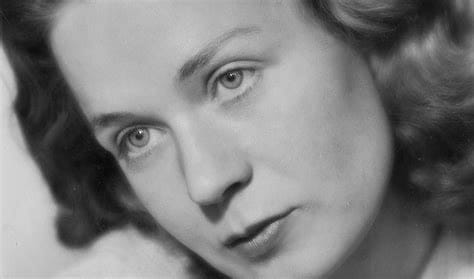
Once again, another year comes to an end. It is slipping by silently, despite all the cacophonies that reverberated throughout. I can hardly recall any particular instances or events with distinct feelings. This tells me that the world has become distant and intangible in some way.
In solitude, in the space full of phantoms, I toil quietly. Whilst I am far from achieving my goal of completing the first draft of my novel this year, I have made some progress. Still, only about one-third written, it is nothing to write home about.
And yet, the year 2025 is not without merit. I have made many startling encounters along the way: with ideas, concepts, the voices from past and present. Whilst I cherish every one of them, one whisper remains constant. It belongs to a Danish author, Tove Ditlevsen, the author of Copenhagen Trilogy, which consists of Childhood, Youth, and Dependency. As someone who has a keen interest in literary accounts of the early years of life, I must single out Childhood as the most fortuitous discovery I have made in recent years.
Childhood is undoubtedly a rare literary accomplishment. The strange directness only capable by a keen child makes it the most poignant read. It must be read in a secluded place, alone, with solemn intention, like a séance wherein the strained attempts were made to commune with the spirit. However, there is no need for candles and incantations to immerse yourself into the story: the Danish author draws us in effortlessly. She cuts straight into the heart of the matter. There is no rage to be performed upon the stage, that theatrical relentlessness that makes Bernhard’s Gathering Evidence utterly unforgettable. There is no afflicted surrender of Death Register in which Akutagawa, known for his brilliant artistry and dazzling intellectualism, discloses a haunting account of his deceased family members, as if to commune with the spirits as he faces the twilight of his life as the champion of soon-to-be crumbling Japanese High-Modernity. Ditlevsen simply speaks to us, as if to herself.
To fully attune to Ditlevsen’s voice, one must carefully choose time and place. Otherwise, in the world full of distractions, one cannot fully appreciate the intimacy of her narrative. Ditlevsen’s Copenhagen is spoken under the breath, actualised through a distant gaze of someone who had been secretly disowned by and displaced in this world. Her Copenhagen was disclosed only on the pages when she was completely alone. Only then, she can unmask herself.
Ditlevsen began her act early. She was too young to attend school when she became acutely aware of her displacement. The first page of Childhood begins by her recounting the distance between a child and her mother across the breakfast table, the fragile silence that kept the mother’s attention away from her. To keep this cold serenity of morning hour undisturbed, the child must have been invisible, for the slightest shift of her gaze would bring her mother’s attention towards her, and the spell would be broken. The recognition of the child’s presence would drag the young mother down to the table, and Tove, a little girl, shrunk under her terrifying gaze: she knew she was the embodiment of her mother’s mortal coil.
The chasm, the no-man’s land between the mother and the child, became her natural habitat. It was a secret place to where no one else could enter. Kafka once observed that everyone held space around them. Henry James demonstrated the lifelong fascination with the inherent obscurity of individual personhood. Young Tove’s no-man’s land was different: it was carved into the shape of a girl with withering disappointments of her parents, the crushing weight of modern life, and the sense of stark displacement suffered by the young child. It was personal, carved into fresh.
She was a stranger on the street, at school, and at her own home.
Thrown into the life plagued with domestic disharmony, economic instabilities, and the moral degeneration, young Tove struggled from the undernourishment, of physical, emotional, aesthetic, and spiritual nature. She was not religious in a traditional sense: her father was a socialist, her mother spiritually indifferent, and thus Tove and her older brother were raised secular. She never went to church. And yet, she suffered from the absence of what one might call the sense of sublime beauty, perhaps a Neoplatonist sense of life beyond the world of mimesis. The only solace was found in beautiful words, unuttered and unutterable, that wrapped her soul like protective armour. Hence, it was decided: the girl was to become a poet.
Like the exile in Nostalghia, young Tove shielded flickering flame from the harsh wind: she wore a mask, feigning mental slowness, and protected herself by becoming nobody. Older girls occasionally suspected her of ‘playing dumb’, yet she was far too skilled: she was safe in her impregnable cloak of ‘stupidity’.
Costly as it was, Tove’s act worked. Although she was riddled with guilt and shame, she was safe. She made herself so insignificant that no one attempted to intrude her inner sanctum: they assumed it was vacant. She was never someone they thought she was. She protected herself from the world by retreating into the no-man’s land. She effortlessly mastered the art of deception.
And yet, there was one thing even Tove could not conceal: the smell of her childhood.
To my limited knowledge, Ditlevsen is the first and the only person who expresses the immediacy of scent to draw the affective map of the city and its peoples. It is far more profound than the scent as the social demarcation as seen in Parasite (Bong Joon Ho). Scent is perhaps the most personal of the five senses. Like Suskind postulated (Perfume), scent is far stronger a sense than vision. A smell is persistent, invasive, and its source often eludes our cognition. For Ditlevsen, the potency of scent is not only enhanced, but expanded. The Dane senses the scent of most unlikely subjects. She speaks of the smell of fear. She sniffs it out in certain buildings and people. She smelt it in the school corridor. It overwhelms her as she wanders the streets of Copenhagen. Still, it is astonishing to hear her speak of this: the smell of childhood.
You can’t get out of childhood, and it clings to you like a bad smell. You notice it in other children — each childhood has its own smell. You don’t recognise your own and sometimes you’re afraid that it’s worse than others’. You are standing talking to another girl whose childhood smells of coal and ashes, and suddenly she takes a step back because she has noticed the terrible stink of your childhood. (Childhood, Tove Ditlevsen, translated by Tiina Nunnally)
It is astonishing the way Ditlevsen describes childhood as something pungent. Perhaps her negative perception is warranted. Unlike her brother, little Tove was undesired, and undesirable. Her circumstances were, like many others in the city, difficult. As adults, we often forget how it was to be small and powerless, perpetually confused, and at the mercy of someone who possesses absolute power over you. We tend to fall into the complacence of a common, sentimental notion: childhood innocence seen through the rose-coloured tint. Ditlevsen refuses to indulge this: childhood is never easy. As children, we were far more aware than we remember. If we choose to be honest, we can, however faintly, feel the presence of creeping phantoms. You may not feel how you felt at a particular moment. Yet, you still remember it. Ditlevsen is one of the few who could relive these moments with the same intensity: you can tell by just reading her text. Still, a question remains:
Why the smell?
Granted, the cities are never hygienically exemplary. Ditlevsen often mentions the stink of beer and urine that permeate the dark entrance of the flat, and the street of Copenhagen. Yet, these are something that fade in time. What Ditlevsen sniffs out is something far more enduring: the living memory of childhood. It is the smell of what conditions each and every one of us. We are made numb to it, and we forget we once were small and powerless, perpetually confused and at mercy of someone else.
And yet, it is still there, says little Tove. I can’t see your childhood; I can smell it. Now, can you smell it?
Most of us cannot smell someone’s childhood in the way she did. However, we can ‘smell’ hers thanks to the book she left. You may not be able to learn how to smell someone’s childhood. I did not. Still, I am glad to know that she did.