Holding Onto the Dragon’s Tail
For the past four months, I toiled day and night to complete my second manuscript for my first novel after scrapping the draft in an advanced stage and starting anew. The below is what I have learned in the process.
Every writer’s method is distinctly one’s own. Therefore, mine must be different from yours. Still, there are a few recognisable types. Although no one neatly fits into one box or another, I think it is helpful to mention them.
First is a strategic planner. F. Scott Fitzgerald famously left a very detailed plan for his unwritten novel. It was meticulously structured: he had determined not only the plot and the characters before writing a single sentence; he had somehow managed to set the word count not only for the entire novel, but also for each chapter. Essentially, he had his unwritten story written in his mind. Given enough time, he could have typed his manuscript following his plan and been done with it. Whether the final output would have matched his plan is naturally indeterminable. Still, it is quite an impressive feat.
The opposite example oft mentioned by creative writing course instructors is William Faulkner. His process had little or no structure. He often began with a single image in his head. The story had to grow on its own with little systemic support. This is also very impressive, yet not because of the method; rather, despite it. Given how nebulous his process was, I must pay respect to the sheer literary quality of his tomes.
We have on one hand an extremely organised strategic planner. On the other, a nebula from which only the likes of Faulkner may produce something of worth.
These are extreme cases. Yet, it is oft mentioned in classroom discussions. Why? Because they set the useful parameter within which most of us find ourselves, and knowing one’s process helps one to work with it to the benefit of the output, rather than fighting with it. Writing is already hard. There is no reason to create additional friction by going against what you work well at. As I can attest from my experience, working against your nature does not help you.
I, for one, started as a failed planner. I began with a singular image, and tried to build a detailed world around it in the first draft. As any planners do, I employed the best available tools I could find to construct the world: Mind Node for mind mapping, Obsidian for bidirectional linked notes, and Aeon Timeline for keeping various plot lines chronologically consistent. In a few short years during which I worked tirelessly on the first draft, I had created a complex mechanism that demanded specific applications to make it work as I intended.
The progress was slow. As the system that helped me build the world in which the story was unfolding expanded and became more complex, it was impossible for me to have a simple, clear overview of my work. The description of the story became longer and muddled. I was no longer certain how long the story would be. I had no idea when I could see its completion.
In May, I had a Zoom call with an established author, who read and critiqued the first ten pages of my draft. He loved the writing. In an inspired discussion, he suggested changing the POV from the distant third person to the close third person of the protagonist. He argued that the change would make the opening chapter far more immersive, and would help with the character development right away.
In an instant, I realised: I needed to rewrite it from scratch. As I saw the opening chapter through the protagonist’s eyes, everything became clear. I understood how her story must be told. To do right with my protagonist, there were no half measures. I had to discard the first draft and begin the story anew.
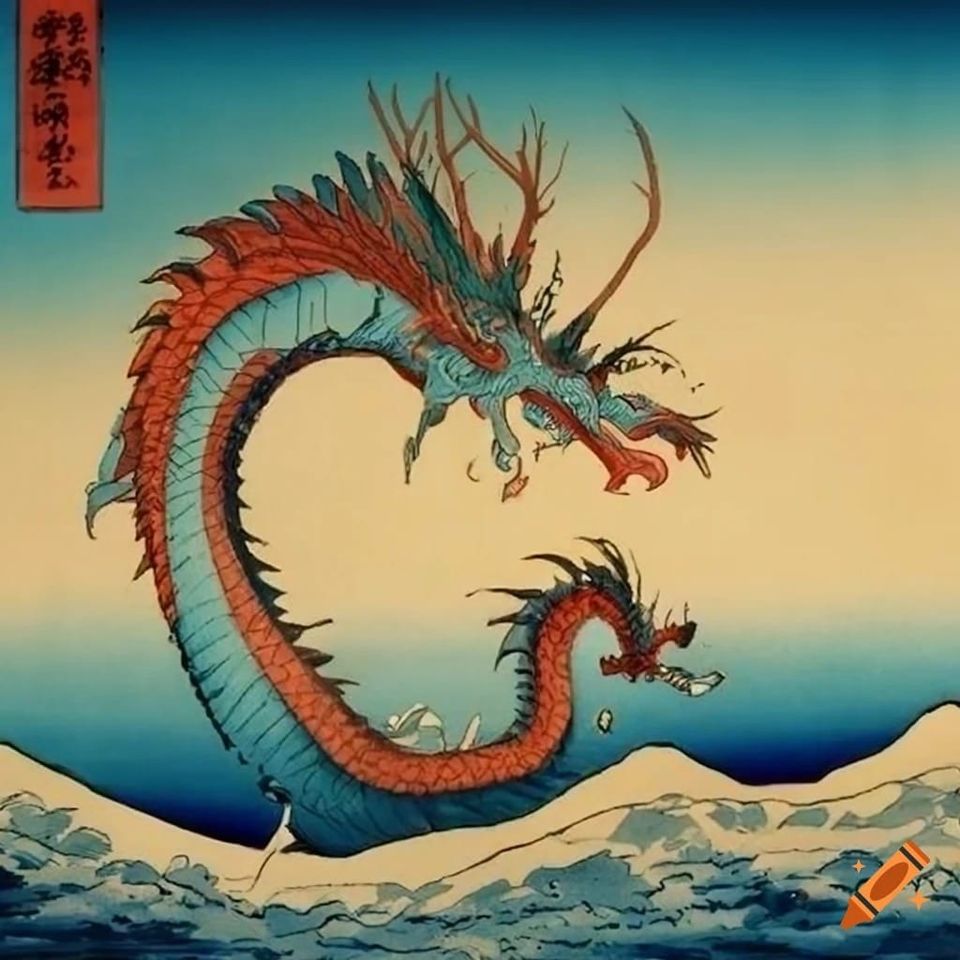
This seemed a drastic departure, and it was. The work on the second draft was quite intense. I can only describe it as holding onto the dragon’s tail for dear life as the creature turned and dived at dizzying speed. I could only bring bare essentials with me for the harrowing flight.
I ditched the Byzantine PKM. I started my day with a notebook and a pencil, not to keep track of thoughts, only to ready myself to resume my work. I sat and waited until my pencil began to glide across white pages. A notebook was not to record anything. I never went back to review what I wrote in it. When it was filled, it was recycled and replaced by another.
Then I opened my MacBook Air and wrote with trusty Ulysses, an excellent Mark Down Editor with the best UI and feature set, which included a distraction-free writing environment, writing goal for each chapter, and a template for the manuscript submission. I used macOS’ Accessibility Reader to listen to my draft to help with editing. Occasionally I refer to a simple chart on Scapple to check on the character relations and locations, or glance at some quotes on Apple Notes.
The new system worked. It was simple yet effective. I was quite happy with it. And I still am.
Why? Because it works without adding complexities to the process. Yet, that is not the entire story.
I am happy with the way I have been working lately, because I have accepted that I am not a planner. Whilst I am no Faulkner, this is the best I can do. All one can do is to recognise what works and try to make the best use of it.
Whilst it is extremely uncomfortable to work without a clear plan or a system, I can only work in a nebula. Granted, working in this way is not comfortable. You feel lost at times. Still, it is better than trying to be someone you are not.
Whilst every writer is different, I may humbly offer some advice to anyone who tried to plan as meticulously as you can and failed.
If you find the dragon’s tail, grab it and do not let go.